New technologies and decentralization

I’ve recently discovered Peter Van Garderen‘s thoughtful piece exploring the concept of  “Decentralized Autonomous Collections”.


This comment by Van Garderen piqued my interest immediately:

I believe that the emergence of blockchain technology and the concept of Decentralized Autonomous Organizations, alongside the maturation of peer-to-peer networks, open library technology architectures, and open-source software practices offers a new approach to the issues of control, privilege, and sustainability that are inherent to many centralized information collections.

This technology and how it is potentially implemented has the potential to disrupt established practice of “exclusive custodians” curating information objects, instead allowing for decentralised control by multiple parties.

This in turn has the potential to disrupt established practice in our memory institutions such as libraries and archives. However, instead of seeing this technology as potentially causing displacement, and even replacing these institutions, I find it exciting to take these ideas and use them to think about how we can transform the traditional roles of custodians and curators into new roles, possibly even as “thought leaders”, as Van Garderen puts forward. Librarians and archivists have in-depth knowledge about how to manage information objects through their entire (continuing) lifecycle, so it stands to reason that they can take this knowledge and incorporate its basic principles and ethical obligations successfully into new ways of thinking and doing, particularly in our current climate that sees increasing surveillance by government, and the growing power and reach of commercial monopolies moving into cultural heritage and knowledge sustainability spaces.

The concept of decentralised autonomous collections brings up interesting new ideas about how to deal with encryption, rights and identity management, and for ensuring the authenticity of digital objects. It also opens up exciting new ideas for implementing digital preservation systems, workflows, and processes in our cultural and research institutions.

For more interesting reading in this area I’m also looking at Denis Nazarov‘s “Bringing Cultural Metadata to Life“, which explores ways in which to simplify and consolidate open cultural data through an open source, decentralized, peer-to-peer network.

And oh, how I wish I was in Vancouver, Canada, on 17 May for ‘The Blockchain and Digital Preservation“!


Digital forensics and digital archiving

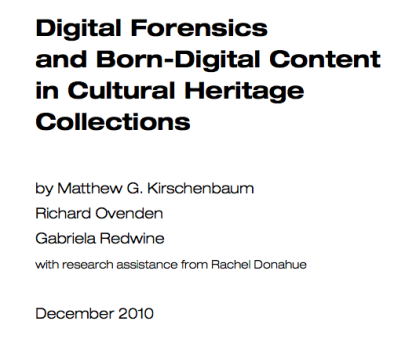
Computers today function as personal environments and extensions of self—we inhabit and customize our computers, and their desktops are the reflecting pool of our digital lives. The digital archivist, therefore, has much to learn from techniques that model the computer as a physical environment replete with potential evidence…(Kirschenbaum, Ovenden, & Redwine, 2010, p. 7)

DigitalForensics

Click to access pub149.pdf


I’m six years late getting to this publication, but the parallels drawn between the processes involved in digital forensics and the work of digital archivists makes for fascinating reading. It’s a great example to me of how to keep looking outside your own backyard for novel and interesting strategies that can be made useful for organising, preserving, and providing access to information.

Something that really spoke to me was this:

Perhaps the strongest point we can make is to reinforce the distinction between tools and procedures…Technology is expensive, but methodology is free.

This paper also mentions a JISC/NIPO study (written by Seamus Ross and Ann Gow) from 1999, called Digital Archaeology: Rescuing Neglected and Damaged Data Resources, calling it the:

…starting place for any cultural heritage professional interested in matters of forensics, data recovery, and storage formats… Although more than a decade old, the report remains invaluable.

The Forensics Wiki has a wealth of information for anyone interested in dipping into this field – Ross & Gow cite this as a possible avenue for encouraging cross-disclipline collaboration and sharing of practitioner skills between forensics and the cultural heritage community.

#fundTrove


The National Library of Australia deserves better than this.

This is a backwards step that encourages a return to siloed, hard-to-find resources – not just for Australians, but for a growing worldwide cohort of supporters.

For the last year and a half, I was working to help support the collection and preservation of public policy research for a digital repository called Australian Policy Online (APO) based at Swinburne University of Technology.

The Australian National Innovation and Science Agenda is one of the many resources catalogued at APO. Being exposed to national agendas like this one has made me highly aware that a government that cannot support a significant service like Trove is not a government that supports innovation.

The National Innovation and Science Agenda states that innovation is:


…not just about new ideas, products and business models; innovation is also about creating a culture where we embrace risk, move quickly to back good ideas and learn from mistakes.


In December 2015 I was able to visit the Trove headquarters at the National Library of Australia. I got to see innovative projects being created with passion, dedication, and buckets of enthusiasm by a very small team more than willing to look outside the box when faced with inevitable digital challenges. Challenges that arise when you attempt to aggregate digital content from many disparate cultural sources and systems.

Tim Sherratt points to the value of Trove as being not just a portal, but a platform:


Portals are for visiting, platforms are for building on. All those hundreds of aggregated collections, all those millions of digitised newspaper articles are available in a form computers can understand via an API (Application Programming Interface). That means clever developers, innovative industries, hackers and tinkerers can take Trove’s data and BUILD NEW THINGS. BOOM! Ideas have to start somewhere, and Trove offers plenty to play with.


This lack of support from our political leadership signals a crisis for our nation’s knowledge workers. It will make access to information even harder for those in remote cities and towns, or those who are disadvantaged by social status. It will mean that some of our brightest minds who use the technical capabilities of Trove to improve society will be hampered.

If our government – our leaders – do not recognise the invaluable gateway to knowledge that Trove is, we must make some noise as cultural heroes and make them realise that knowledge is power, and those of us who can wield it will not go out without a fight.


The birth of a Melbourne hipster bot

Today, faced with a dreary, cold, winter-like Melbourne in the middle of summer, I was trudging to the train station suffering from a minor bout of Friday-itis mixed with ongoing Bowie-bereftness.

The first turning point from meh to yay was initiated by a particularly jaunty train driver on the Metro Trains Sandringham line to the city. I’m paraphrasing from memory:

I’ve just had a thought and I wanted to share it with you all. You’re all awesome. I know we’re getting to the end of the week, everyone’s feeling a bit glum in this weather, it’s Friday, patience is running thin by the end of the week, but today no one has forced open the doors or done anything stupid. So thank you, and have a great day.

I saw a whole carriage of blank-faced and device-absorbed humans smile and look a bit happier, a bit lighter. Thank you, mystery train driver. I hope our paths cross again.

The second turning point, and catalyst for this first blog post of 2016, was a collaborative, fun twitter exchange that went on into the morning.

It started here:

The challenge that Hugh was referring to was this:

I love the power of collaboration on Twitter – it was like a hive mind of creativity in a flurry as it escalated:


And so begins the birth of a fabulous Twitter bot project. Send any suggestions or ideas for the bot’s brilliance Hugh Rundle‘s way.

OCLC Asia Pacific Regional Council Conference 2015

The seventh OCLC Asia Pacific Regional Council Conference was held at RMIT University in Melbourne, Australia, on 3-4 December 2015.

Over two days information workers from over 19 countries gathered to share success stories, challenges, and ideas about the future of libraries.

Bringing ideas from business and the world of corporate advertising, keynote speaker Dan Gregory asked an important question that can be useful to all GLAM sectors:

What is the tangible value that you are offering beyond the utilitarian, the merely functional? What is your value proposition?

Gregory also spoke of the importance of engaging communities in ways that enable them to feel ownership, rather than just obligation, and talked of the changes that hyper-connectivity has brought about, in particular how communities and groups can form from shared common values, rather than simply ethnic connections, or geographic location.

Global collaboration was a big theme of the conference, especially with so many different country representatives in attendance, including some from Europe and Canada.

Peter Green asked a great question on Twitter about librarians being good at collaboration generally, but wondering whether we are good at it outside our own circles? I’d love to see this question debated by a lively group of information people.

Lorcan Dempsey‘s thoughts on the networked world and the evolving scholarly record, especially new roles for publishers in thinking about and creating systems that provide workflows and services for the entire research lifecycle, were thought-provoking. I was especially struck by the notion that coordination at scale is required to build and maintain One Big Global Library.

One of my favourite moments of the conference was the answer to an audience question by David Whitehair.

Rather than engaging in an endless debate about schemas and standards, this answer for me succinctly demonstrates a flexible, forward-thinking approach to the challenges that metadata can create for digital records and discoverability.

For me the strongest theme running throughout the conference was that global collaboration is key to building our value propositions and our services so that our cultural institutions do not become extinct. To do this we must be able to foster creativity and innovative ideas by building spaces and time for them into business practices.


Convergence agents & librarian badasses

On this, the eve of the introduction of mandatory data retention laws in Australia, it seems fitting that this Tweet was the first thing I looked at today:

Last week I attended two events where data retention was a hot topic: the inaugural Swinburne Internet Policy Workshop (5 October 2015 | SIPW) organised by the Swinburne Institute of Social Research’s Digital Society Group, and the Australian Internet Governance Forum (6-7 October 2015 | auIGF).

The SIPW and the auIGF covered diverse issues: gender and the internet, Indigenous communities and internet access, public policy and innovation, metadata retention, ethics and regulation, and social protests. While the auIGF aimed to be more of a public forum for community groups, government, and the media, the SIPW was a little more of a research-focused academic event.

I was really alarmed at the SIPW after listening to Associate Professor Jennifer Holt speak (a talk based on this paper), especially as she predicted that soon it may not be possible to use government services without being forced to log in with a ‘digital passport’ provided by Google or Facebook. Is this what the internet is becoming? This is not freedom.

Also at the SIPW there was talk of how journalists have been unfairly targeted if they are seen to be speaking out about metadata retention.

I worry about the loss of intrepid, fearless journalism under these new laws, especially after attending the 2015 A.N. Smith Lecture in Journalism given by Sarah Ferguson.

The Media, Entertainment & Arts Alliance paints a grim picture of the incoming laws, saying that they “make every citizen a suspect, seek to intimidate and silence whistleblowers, and crush public interest journalism“.

On Twitter, fierce defenders of privacy have been sharing resources and instructions about how ordinary citizens can go about defending their online rights.

Events like the SIPW and auIgf are extremely helpful for professional development – and for me, arguably better than any formal education has proven to be for this kind of knowledge-gathering. These events also give a voice to what I’ve decided to call “convergence agents” – interdisciplinary researchers, educators, activists, and information professionals who have a vision and a mission to both disrupt and add to research endeavours in many different fields – technology, law, policy, education, and information. Convergence agents are agents for change, as they have a broad grasp of the basic elements of different fields that they can pull together to make real change happen.

I think we need more information professionals who aspire to be convergence agents, especially in government and industry. We need to walk in the corridors of power with the potentially powerful skill sets we have, to work towards implementing systems, procedures, and policies that enable online privacy and access for all, so that we can truly become the information-wrangling ‘badasses’ we need to be.

NOTE: The live tweeting was excellent at SIPW and is well worth scrolling through for a flavour of what went on during the day.

Guest blog: Where are the activist archivists?

by Ross Harvey | rossharvey1@gmail.com | elibank.net | @TaksNz

Are archivists radical? Three public lectures sponsored by Monash University last week challenged archivists to become more engaged.

I presented the Whyte Memorial Lecture on 15 September with a mild call to arms that encouraged archivists to assert themselves. Two transfixing lectures on 17 September pursued this radical theme much more forcefully. They will stay in my mind and inform my thinking about archives for many years to come. They have completely changed my views of what archivists must strive to do.

The first speaker was Andrew Flinn (University College London) who spoke about research into community archives. The second speaker was Anne Gilliland (University of California Los Angeles) on recordkeeping in a digital, post-colonial world, specifically how to support inclusion in a digital age. Both speakers are eminent and influential archives educators and their lectures were riveting because of their radical content.

Flinn’s lecture, ‘Another world is possible’, addressed social justice issues in three themes:

  1. Recordkeepers as advocates for openness in government and corporate contexts
  2. Community-based control of archives
  3. The role of archival educators and research in critical examination and improvement of archives practice

Flinn argued for ‘research-informed education and practice that makes a difference’, seeking ‘fundamental change, not preserving the status quo’.

Gilliland’s paper investigated two themes:

  1. Social and ethical responsibilities of archivists and recordkeepers towards society’s least empowered individuals
  2. The need for recordkeepers to respond to grand societal challenges

Gilliland highlighted the role of recordkeeping in diasporas in reconstructing migrants’ memories, and made specific reference to the massive forced displacements in recent weeks. Gilliland posed the question: how can recordkeepers be a key part of addressing this, especially in a digital context? She heavily criticised the failure of recordkeepers to meet any of the aims of the Unesco Universal Declaration on Archives 2011 (‘open access to archives enriches our knowledge of human society, promotes democracy, protects citizens’ rights and enhances the quality of life’). She challenged recordkeepers to ‘confront [their] own complicities’. Recordkeepers have ‘failed the disenfranchised’. These are fighting words!

Gilliland continued with more damning indictments. Standard recordkeeping practice fails refugees by imposing unrealistic standards. Recordkeepers have failed in advocacy roles – an example was not speaking out against anti-terrorist laws. Current recordkeeping systems are too complex, too hard for the uninitiated. Digitisation of records is carried out for and on behalf of the elite, those in power, the oppressors. She concluded that recordkeepers have failed. New structures, new systems, and more flexibility are urgently demanded. She ‘exhorted’ recordkeepers and academics to use digital records and ways of working in support of all citizens of the world, especially the dispossessed. In Gilliland’s words, ‘all of our current archival ideas privilege those in control’.

The questions from the audience disappointed. They did not respond to the exciting although confronting challenges offered, but looked at the difficulties. I wondered at one point if Australian recordkeepers – those in the audience, at least – were moribund. The responses from Flinn and Gilliland emphasised education of new professionals who better understand the issues and are motivated by major societal concerns, collective action, individuals who can apply social justice mandates in their workplaces, and stronger professional associations. It is an ethical imperative to act.

These papers were highly stimulating. Gilliland’s will probably be the best I hear this year and most likely also for some years to come. But on reflection my feelings are mixed: can these major challenges be addressed by archivists currently in the workforce, with their strong conservatism? I rather think not. The hope has to lie with new professionals who are motivated by educators like Andrew Flinn and Anne Gilliland to address major societal concerns through collective action.

Andrew Flinn’s email signature quotes Aneurin Bevan: ‘We have been the dreamers, we have been the sufferers, now we must be the builders’.

So here’s my challenge to archivists: be the builders.

#contextiseverything Whyte Memorial Lecture 2015

Last week I attended the annual Whyte Memorial Lecture, given by Professor Ross Harvey.

The Whyte Memorial Lecture honours the late Jean Whyte (foundation professor in the Graduate School of Librarianship at Monash University, Victoria, Australia) and her sister Phyllis, who left bequests to Monash to support research in librarianship, records, and archives.

In this year’s lecture: Keeping, forgetting, and misreading digital material: libraries learning from archives and recordkeeping practice, Harvey extolled the benefits of archival principles, and called for them to be used for managing digital materials.

“There is much in the toolkit of the archivist that could better equip librarians faced with managing digital materials in ways that ensure that they are not misread and misused in the future – not the least, an understanding of provenance and the preservation of context.”

What Harvey’s lecture did for me was prompt me to reflect on my current professional role. As an information manager working with a repository of grey literature resources that help inform public policy making in a wide range of areas, I now am certain that I must apply archival thinking to the way I do things. I am fortunate in that my role is one without a defined roadmap, and I have to constantly seek out best practice in a lot of different areas: schema development, taxonomy creation, research data management, and linked open data, in order to implement frameworks that work for our resources.

Harvey also spoke of the benefits to be gained from collaboration with others working in different sectors of the information professions. I realised that this is something I already do, both in my workplace and also on other outside projects.

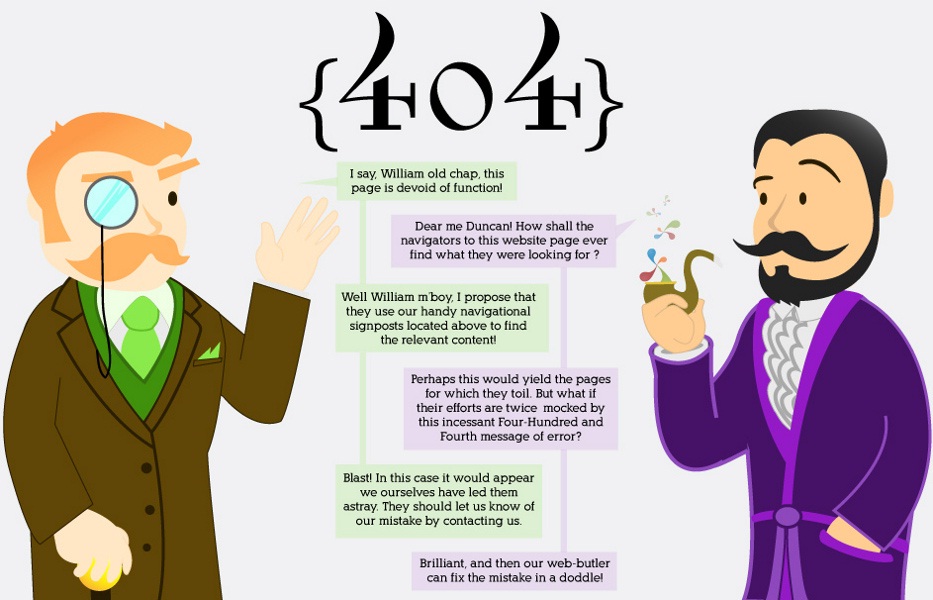
Together with the IT developer at my workplace, we hope to soon mesh our skills to implement ways to provide context for people, organisations, places, and programs, so our resources can become much more than just the sum of their metadata-y parts. Because we collect resources relevant to policy and practice, we have to be preparing now for government changes, as department names inevitably change (often without warning) and sometimes an entire website’s links will go dead for some of the resources we collect. Hello, my old friend the 404 error message.

404-error
Image from: http://404-error.com/

Thanks to this collaboration with IT expertise, I am lucky to have had the chance to learn about systems and machines, and to realise that we need to speak the language of the machine to make things happen the way we want (until they learn to speak our language, by which point they may well take over and decide that our fleshy forms aren’t worth much and machines will rule what’s left of our planet, THANKS Stephen Hawking for giving me nightmares. At least it looks unlikely that robots will take the jobs of archivists or curators, but librarians might be a little worried, and library clerks and assistants – look out!).

I think of myself as an archivally-minded digital librarian – and after Harvey’s lecture I am certain that it is time to step up and make changes to ensure the sustainability of the information I manage. In my current work role, I realise that I need to be implementing the best parts of the archival process now, so that in 10, 20, 50 years, and beyond, people will be able to trace the influential research that was informing policy making, and who was creating it. And most importantly in my mind, I have to provide persistent access to the stuff. There are challenges involved – we work with open source Drupal for a start, with all its interesting, innovative modules (our DOI-minting module is one such undertaking), and its limitations (Drupal depends on its engaged developer community) – but these challenges are not insurmountable, given creative thinking.

It is such an exciting time to be working in this space, and with established professionals like Harvey telling us to ‘get our heads out of the sand’ and promote our skills more widely, it is most definitely time for radical-thinking information professionals to join forces and start making changes to the way we conduct our practice of managing information.

This is a challenge that could perhaps be answered by one inspiring development in Melbourne, Australia – the Galleries, Libraries, Archives, Museums, and Records (GLAMR) New Professionals Group that provides face-to-face forums for all sectors of the information professions to meet and share experiences. This group has the potential to become a strong, powerful representation of the new vanguard of information professionals entering the industry aware that we need to fully utilise all of our different skills for the effective and sustainable management of digital resources.

I am so fortunate to have worked with an archivist and a knowledge manager in other project work, and as a result of this collaboration, my knowledge has already increased exponentially. And yet, I realise there is so much more to learn.

I can feel myself becoming a new breed of information professional, no longer simply ‘librarian’ or ‘archivist’. I am becoming armed with a well-rounded knowledge of how these previously separate disciplines approach common information management problems, and an awareness that together we could do so much more to preserve and provide access to the world’s information.

I must give a thank you to Professor Ross Harvey for a considered yet radical speech, and a thank you to Monash University and the generosity of Jean and Phyllis Whyte that makes this annual lecture possible.

Who knows, perhaps a future Whyte Memorial Lecture could be a group presentation about the radical new changes the GLAMR New Professionals Group makes happen – I’m putting the challenge out there, and I’m mightily keen to be involved in the information profession revolution.

Extra bits
Professor Harvey spoke of many other things in his lecture not touched on in this blog post – preservation, self-archiving digital objects, and the curation of collections by individuals. The full paper is well worth a read.

For another rundown of the event, see Michelle De Aizpurua’s blog post.

To get a sense of the live experience, here’s the Storify, thanks to all the live tweeters.

NLS7 (New Librarians’ Symposium) 2015: thoughts on live tweeting

NLS7Tweeting

Although a tad narcissistic, my first foray into using Storify has resulted in a collection of stories of my own tweets from each session I attended at NLS7.

I’ve done this mainly for my own record and reflection in years to come, as this was my first sustained effort at live-tweeting an entire conference and I want to be able to measure if my style or method changes for future conferences.

I’ve been doing some reading on live-tweeting and reasons to do it. The Research Whisperer talks about the importance of ‘having a public record of what took place, from one person’s perspective‘. This makes sense to me, as this is exactly how I see my Storify collection.

What I like about live-tweeting is the ability to take on the role of a ‘citizen reporter’ for events like NLS7. My main goal was to provide a ‘flavour’ of each session I went to for those unable to attend the symposium and who were following the tweet stream from afar, by tweeting key points from each speaker, and also noting any pithy points that resonated for me.

What I continue to struggle with is the authenticity of live-tweeting, and not knowing whether a tweeter’s words are their own take on the situation or a direct copy of what they’re heaing. So when I live-tweet, am I putting my own spin on what I’m hearing, or am I typing quotes from the presenters verbatim, in order to best represent what the presenter intended? I suppose the more live-tweeting I do, the more I will cultivate my own voice, and those following along will in turn come to know this voice, and know what to expect. But what do I do about my continual fascination with playing devil’s advocate to explore many sides of an issue? By doing this, do I risk confusing people, or losing any trust that may be gained in my ability to correctly and without bias document events?

The interesting question as to whether live-tweeting without permission is unethical is explored by The Contemplative Mammoth (why did I not think of such a title for my blog?) and the idea that ‘it should be taken as a given that a tweet is not necessarily an accurate representation of what was said’ is noted. This I think is a nice point that gives those newer to the experience of live-tweeting a bit more confidence to experiment while finding their style or ‘voice’ for live-tweeting.

Contemplative Mammoth also put me on to the interesting article Let’s have a discussion about live-tweeting academic conferences which raises some good thoughts on misrepresentation and brings up the question: are conferences actually ‘public’?

For me, live-tweeting at NLS7 was really an excellent way to connect with new peers in the industry, and to forge a Twitter Bond that will last long after the symposium, one that might even help assuage the #postconferenceblues that are in full swing.

As well, I feel that live-tweeting will in future become a public note-taking device for me – one where immediate broadcast can share my findings with many, many others and invite comment, debate, and further discussion.

ANDS data workshops 16 July 2015

Some takeaways from two recent workshops organised by the Australian National Data Service (ANDS): RDM101: Research data starter for research data support staff and Hip topics: What’s trending in RDM in Victoria?

Trying to find datasets online is not a completely straightforward process. Multiple searching methods are required in different data ‘portals’, and ANDS lists a few:

One interesting point that was discussed after investigation of the portals was that mobile-compatible websites are few in this space – this is a major drawback if researchers want to upload datasets from the field using mobile devices. If the death of the PC comes to fruition with the majority of the populace switching to mobile devices in the near future, it would be good to see mobile compatibility developments hastened for data portals.

A group note-taking session documenting reasons data is valuable resulted in a collaborative Meeting Words document.

Skills
The changing skill set of librarians was examined. Data librarians need to be across many different areas to do their job well – research data management, open access and copyright issues, datasets and dataset management, and increased IT skills.

Socio-informatician is the name given to two new information management roles at Melbourne University, adding yet another term to the librarian job titles lexicon.

A constant re-evaluation of skills is required to be successful in the fluid environment that is research data management.

Tools
A metadata group tool called Redcap was discussed.

ORCIDs
So far there hasn’t been an end-to-end roll out of ORCIDs in Australia, and the ORCID consortium model currently being drafted by the ORCID working group (CAUL, ANDS, ARMS, CAUDIT, AAF, UA – with input from ARC, NHMRC) was discussed. A minimum of 20 members will be needed to implement, and more information on this will be forthcoming in the next month or two.

It was good to hear that the Wellcome Trust is now mandating ORCID IDs for research grants – it does seem that mandates are needed from the top so that they trickle down and become embedded in processes.